Posted: 2026-01-19
Buddhacello
Limoncello
Limoncello is a classic Italian digestif liqueur. It is made with lemon rind steeped in high-proof alcohol which is then diluted and has sugar added to it.
Ordinary vodka will create an inferior product; the higher water content prevents the aromatic oils in the rind from absorbing effectively, and will instead tend to pick up bitter flavonoids. We're after the terpenes, which are not water soluble.
95% rectified grain spirit was never particularly easy to get, but in 2014 a teenager took a bunch of shots of it and died. Since then it's become basically impossible to get in Victoria — you'll need to get it shipped from interstate. The price tag is not as whopping as it looks at first glance: this is around two vodka bottles worth of alcohol.
Buddha's Hand Citrons
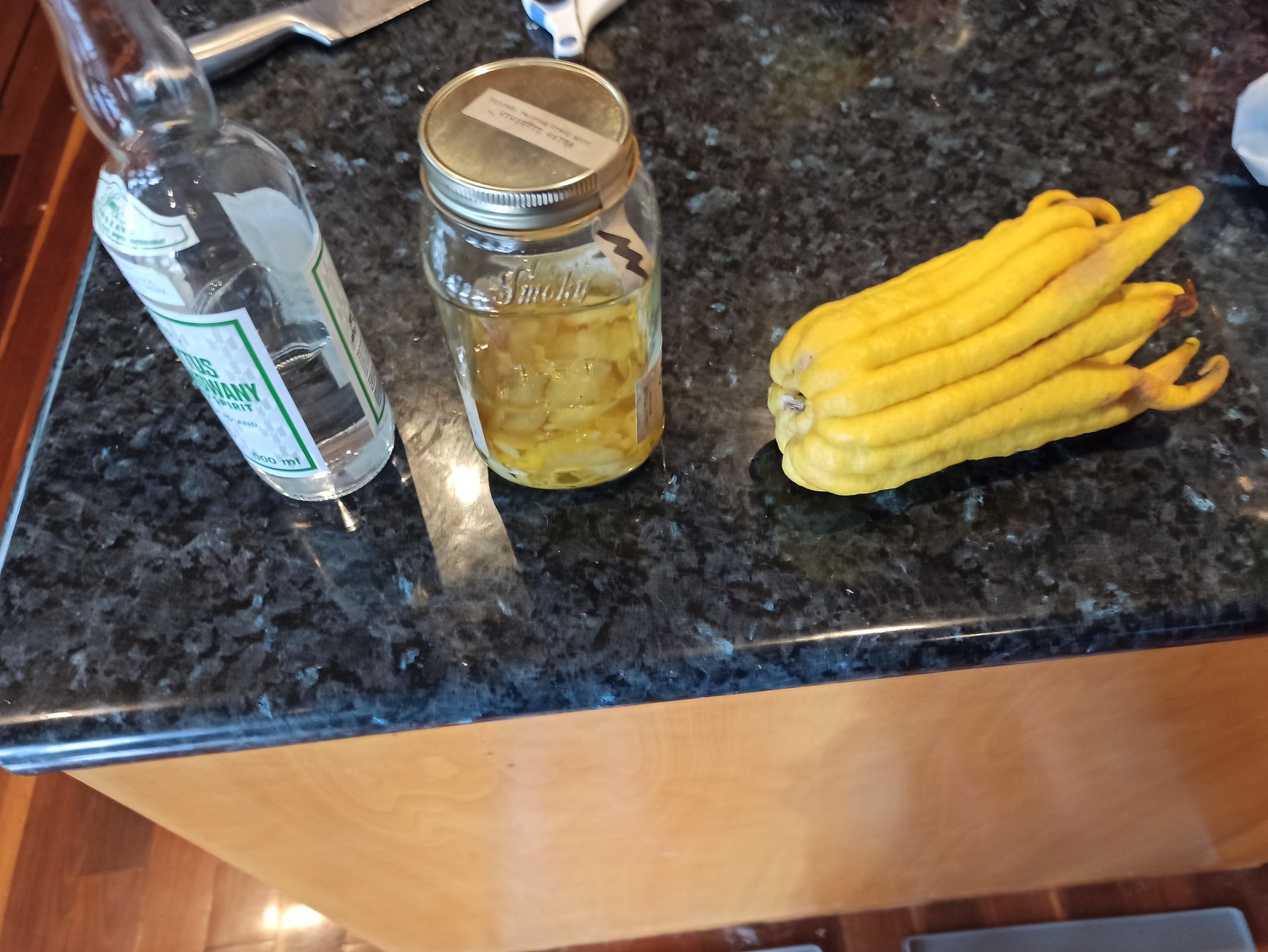
I call them Cthulu Lemons. They have no edible pulp: it's just fragrant rind and the rest is nothing but pith. They are basically only good for perfumes and liqueurs.
The gnarly geometry aside, what's special about these fruit is that the pith is much less bitter; you can be much more aggressive with removing the peel and know that it's not a big deal if there's a bit of white when you do. Obviously you still want to minimise it, but the margin of error is much larger.
The process of these fruits decaying is incredibly disturbing to behold. You should check any fruit you receive for signs of rotting; they become soft and spongey. This must be aggressively pared off before you start.
Making Buddhacello
By far the hardest part of the process is breaking down the citron. I found it easiest to slice the "fingers" off at the base of the "hand" in one go, then peel it all. It's still pretty laborious.
Then you just steep the peelings in your 95% alcohol for a week or two. The highly efficient extraction process means this happens pretty quickly, but if you're going to the effort of gathering exotic materials you might as well do it properly.
The person I was doing this with took it upon themselves to pasteurise the glass jar in boiling water, which is both completely unnecessary and creates a pressure vessel full of heated and highly flammable alcohol which will readily shatter from any thermal shock. Don't do that.
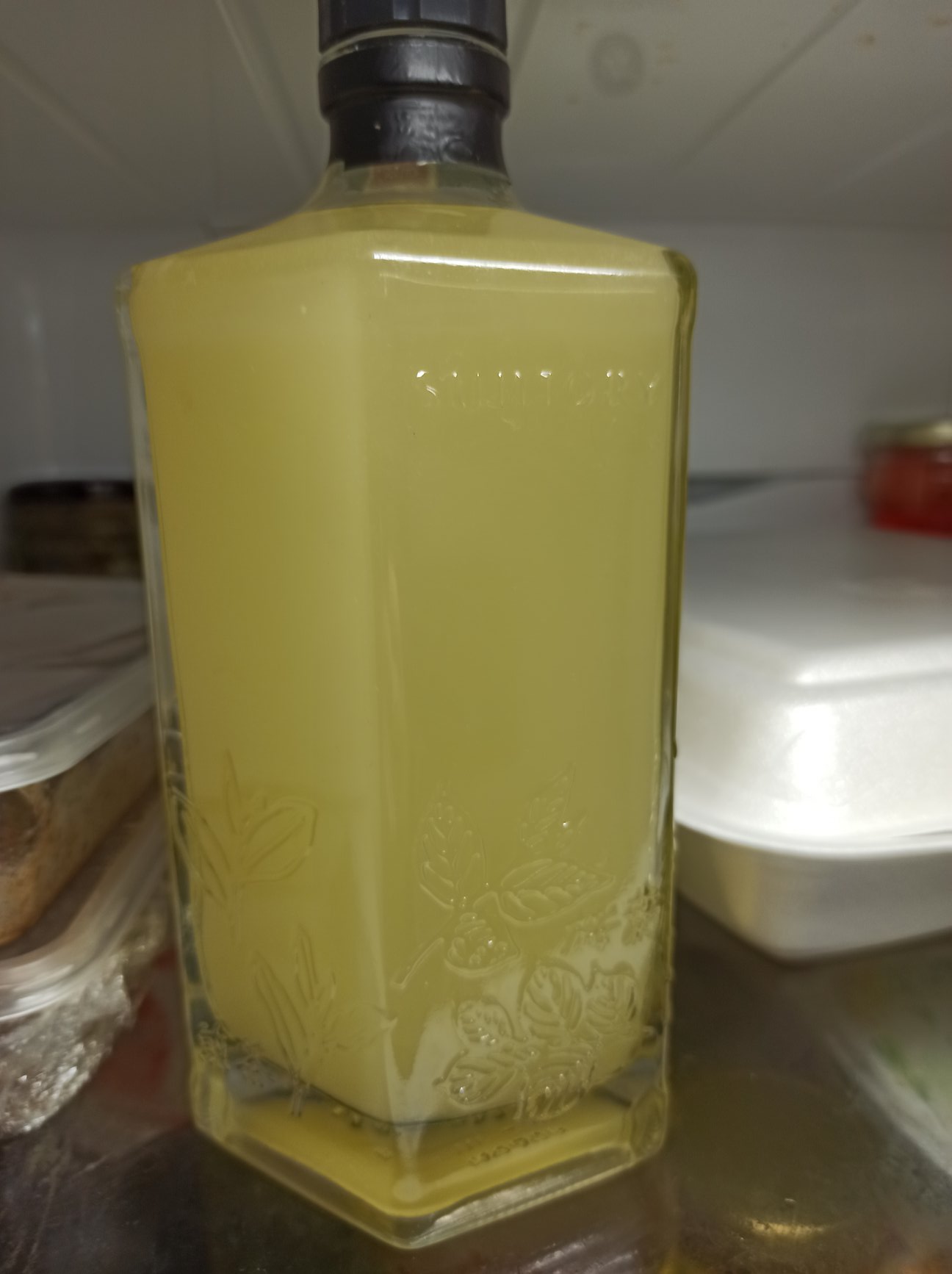
Once the steeping is complete, it'll yield a bottle of yellow alcohol with a lot of aromatic oils visibly altering the refraction. When you add water, they will louche and the solution will become cloudy.
From here, the only variables are basically ratios.
You're mixing the alcohol with simple syrup, water, and lemon juice to create a less-alcoholic result with a sweet-and-sour flavour profile. I'm not going to tell you how much of each to put in, because that's your chance to be creative. The classic target strength for a limoncello is about 30% alcohol by volume.
You could also reasonably substitute some of the sugar for artificial sweetener.
Traditional limoncello does not have juice, but I think it's better with something to balance the sweetness and remove any possibility of evoking the characteristic "dishsoap" taste.
Drinking It
This type of drink is usually had as a shot after dinner. I haven't actually tried making cocktails out of it, but it's a pretty reasonable flavour profile for a lot of fresh, sweet/sour fruity ones. It would make for a fabulous margarita or Old Fashioned. It could also work with soda water as a spritz, or with prosecco or a lemon martini.
It'll keep pretty much forever.
Checkin
Version: 1
Written: 2026-01-19
Written on: 7.5mg olanzapine since 2025-11-11 - likely causing significant cognitive impairment
Mental health was: poor - estimate 25% brain